
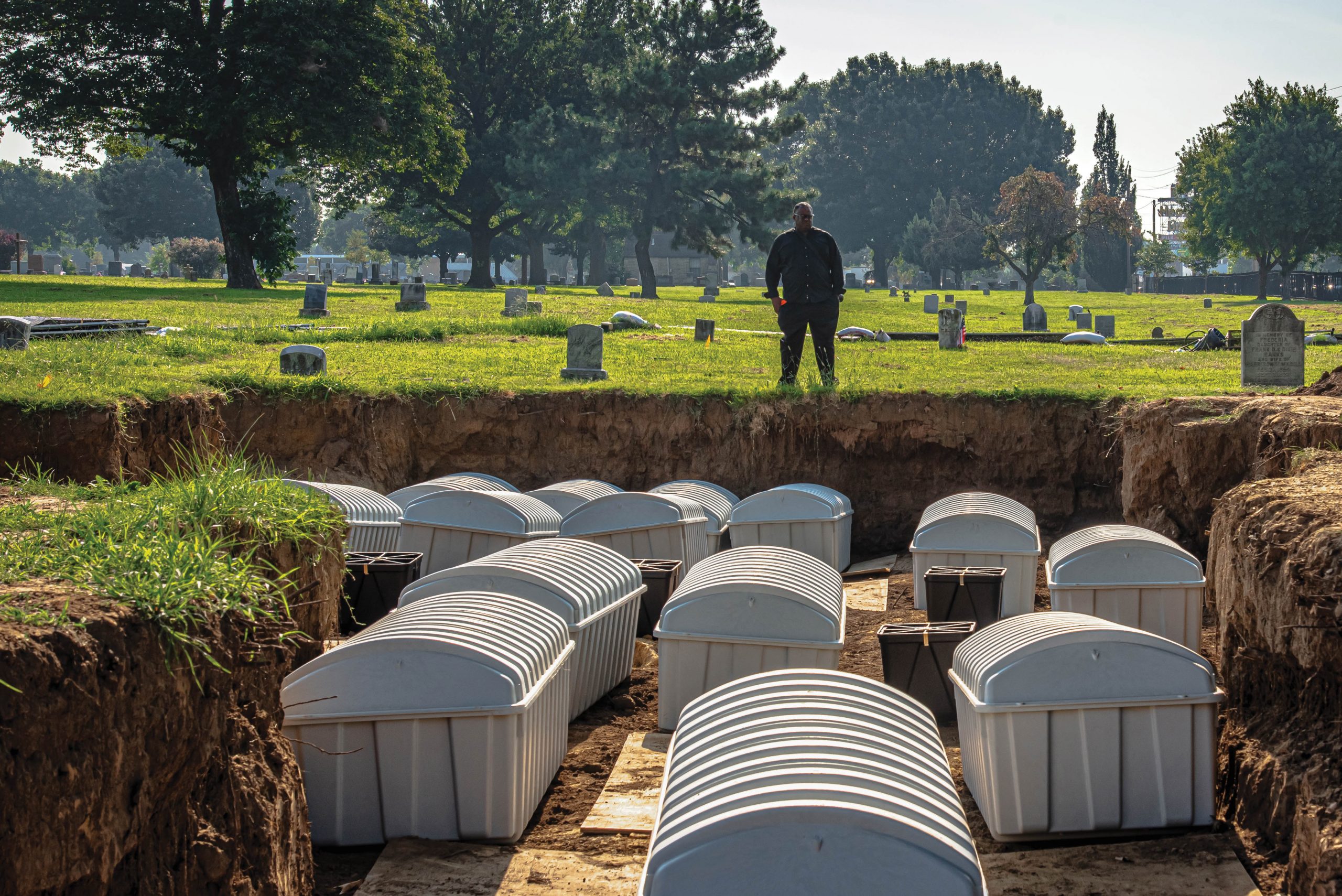
By Elizabeth Lunday
In Newnan, Georgia, sometime around 1902, Thomas and Amanda Meriweather Daniel welcomed their youngest son—C.L.—into a family already reeling from loss. Of their seven boys, only five would survive past infancy; Thomas himself died before 1910. Young C.L., when he was 8 years old, was recorded as “Seal” Daniel on that year’s census, his true name forever obscured by a census taker’s mishearing. What, if anything, the initials stood for, was never recorded.
Amanda raised her surviving boys under the constant shadow of racial terror. African Americans endured strict segregation in the South, and even rumors of transgressions against white neighbors could lead to public spectacles of horrific violence. Newnan, where the Daniel family lived, witnessed a gruesome lynching a few years before C.L. was born, and up to 25 African Americans were killed by rampaging mobs in nearby Atlanta in 1906, when he was about 4 years old. In 1899, a mob tortured and lynched a Black man named Sam Hose. C.L. was born several years after, but public murders like these left an indelible mark on communities. “I imagine the trauma of that incident continued to reverberate through that community,” reflects Boston University historian and professor Dr. Chad Williams.
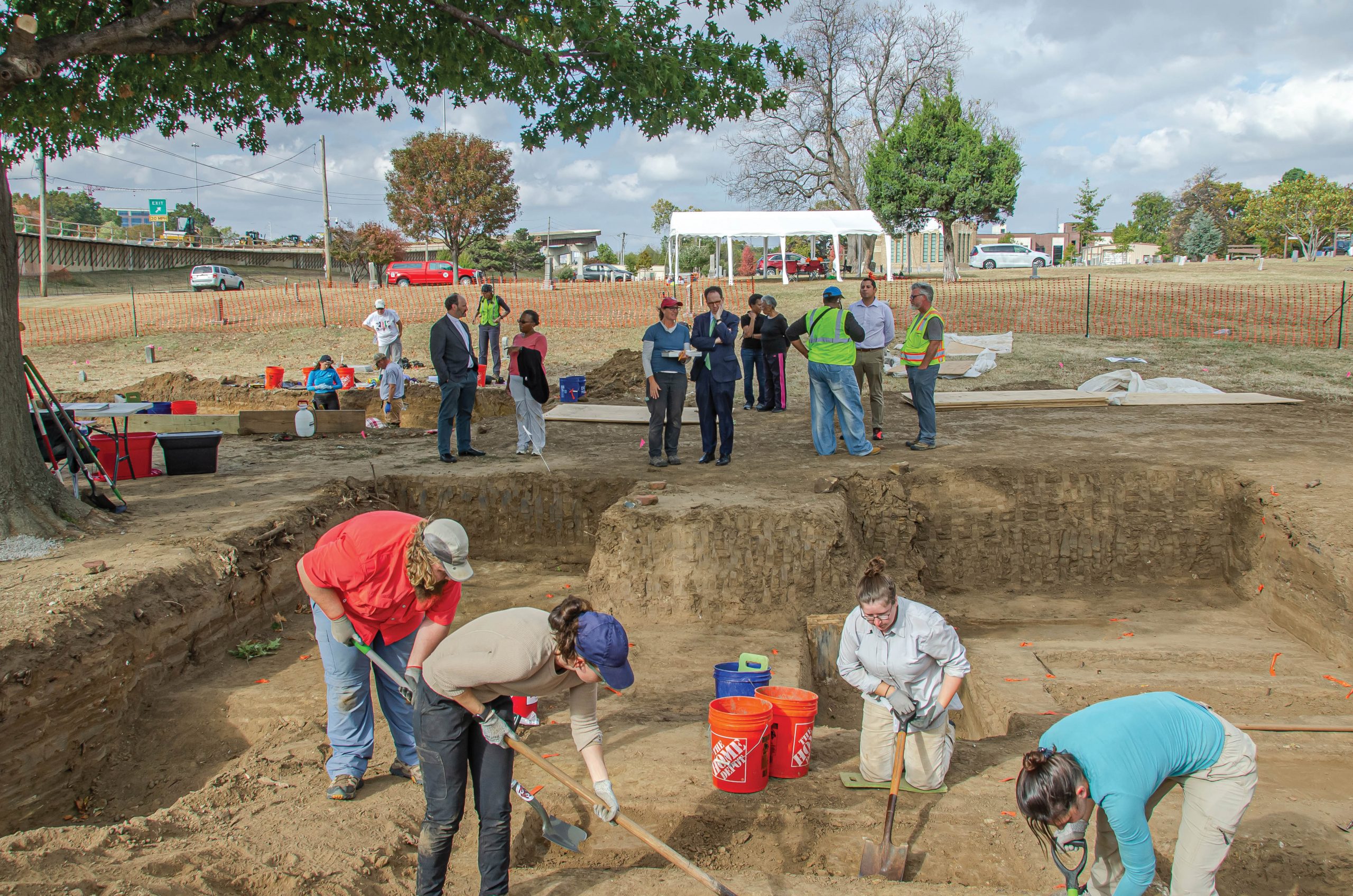
Kary Stackelbeck (center, left) briefs then-Tulsa Mayor G. T. Bynum (center, right) during a site visit on Nov. 3, 2022, with project researchers, City representatives, and other community members while excavations by Stantec archaeologists (foreground) were ongoing. Photo courtesy of the City of Tulsa.
Daniel eventually left Newnan, but he could not escape the violence. It found him sometime between May 31 and June 1, 1921, in Tulsa, Oklahoma. The day before, May 30—Memorial Day—a routine trip in an elevator led to Dick Rowland’s wrongful arrest. Rowland was accused of assaulting a white woman in that elevator—a spark that ignited smoldering racial tensions in Tulsa.
The next day, a white lynch mob surrounded the courthouse where Rowland was held. Representatives of Greenwood, the African American neighborhood where Rowland lived, drove downtown to protect him. By 10 p.m., shots rang out, and rioters descended on the Black community.
In the face of vigorous defense organized by recently discharged Black World War I veterans, the mob withdrew around 2 p.m., but only to rearm and reorganize. At dawn the next day, an improvised cadre of around 10,000 white attackers—bolstered by police, National Guard troops, and individuals firing from low-flying planes—invaded Greenwood.
They first looted and then set fire to block after block: the Dixie Theatre, the Red Wing Café, two newspapers, 14 churches, and hundreds of homes all went up in flames.
The “Black Wall Street” that had flourished since Reconstruction lay in ashes. More than 180 people were hospitalized, 35 blocks leveled, and 10,000 rendered homeless. Dozens, perhaps hundreds, lay dead.
Among them was C.L. Daniel.
This is an excerpt of ‘Greenwood’s Dead, Named at Last,’ in American Archaeology, Fall 2025, Vol. 29, and No. 3. Subscribe to read the full text.
FURTHER READING
- Read about the 1921 Graves Investigation or assist with identification
- Intermountain Forensics
- University of Florida C.A. Pound Human Identification laboratory