
By Tracy Loe
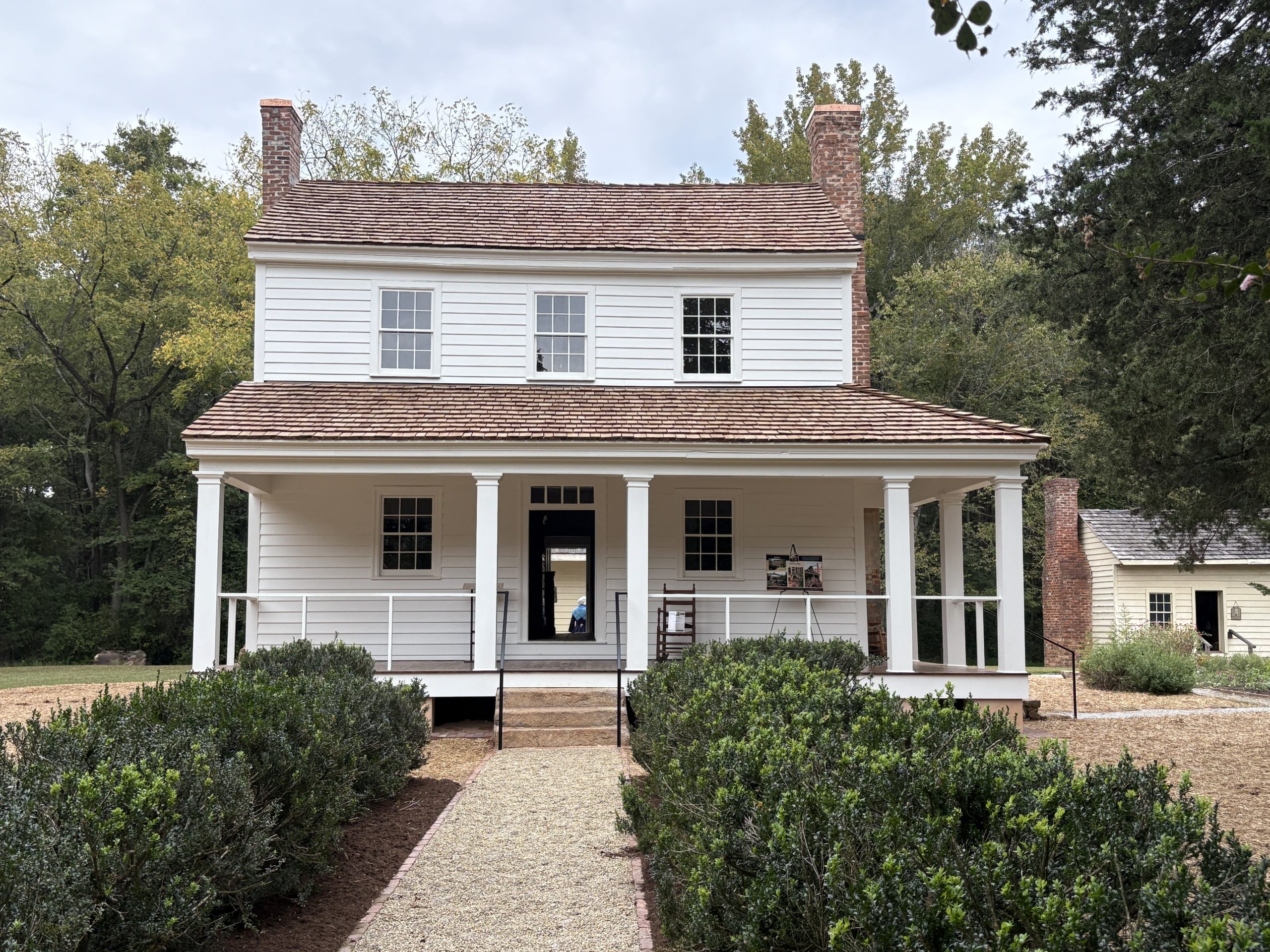
Walnut Grove, a plantation-era site in Spartanburg County, has reopened its manor house to visitors after a major stabilization project to keep one of the South Carolina backcountry’s best-known historic homes standing. The site, operated by Spartanburg History (the Spartanburg County Historical Association), traces its roots to a 1763 land grant from King George III to Charles and Mary Moore. The couple eventually held thousands of acres and raised 10 children in the house they built around 1765, according to the organization.
Walnut Grove is closely tied to the Revolutionary War fighting that swept through the region. Spartanburg History says Moore family members supported the Patriot cause, and local militia gathered at Walnut Grove ahead of the Battle of Cowpens in January 1781. The group also ties the site to a November 1781 Loyalist raid led by William “Bloody Bill” Cunningham, during which a Patriot soldier sheltered by the Moores was killed.
Preservation work on the manor house intensified as age and damage took a toll on the structure. In 2020, the Spartanburg County Foundation initiated a comprehensive evaluation of the structure, followed by a $1.5 million restoration to address serious structural problems.
A historic photograph from 1904 became a critical reference point to inform exterior details and proportions, and structural repairs began at the foundation, where failing supports had caused the building to lean. According to the news release, crews “carefully lifted the house in small increments to install new masonry piers alongside original log elements, providing stability while preserving historic fabric.”
The team used three-dimensional laser scanning to document existing geometry, allowing new structural supports to be added without flattening or disguising the building’s historic irregularities. Where possible, original members were retained and strengthened through sistering rather than replacement. The home restoration revealed tangible traces of the home’s past, preserving evidence of early grain painting and documented original hardware, including door locks bearing British royal warrants. These elements now contribute to the interpretation of the household’s material culture and social standing during the 18th and 19th centuries, the firm said.
As restoration work moved forward, Walnut Grove also became the focus of new archaeology aimed at expanding how the site tells its story, particularly the history of enslaved people, who lived and labored there. In March 2024, FOX Carolina reported that archaeologists began excavating behind the main house after funding was secured to search for traces of the plantation’s original slave quarters. The report said archaeologist Lamar Nelson located foundation remains believed to be associated with a cabin and that the team expected to recover thousands of artifacts over the course of the work.
Today, Walnut Grove includes the manor house along with additional historic buildings and interpretive spaces, including the kitchen cabin and Rocky Spring Academy, plus grounds open for guided tours and self-guided visits. Visit spartanburghistory.org/sites/walnut-grove for details.
-
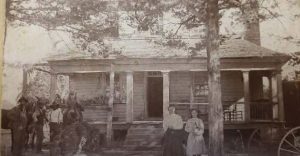
- A 1904 photograph of the Walnut Grove house in Spartanburg County, South Carolina. The image served as a key reference point for the restoration, documenting the home’s exterior appearance prior to later alterations. Photo courtesy of Spartanburg County Foundation
-
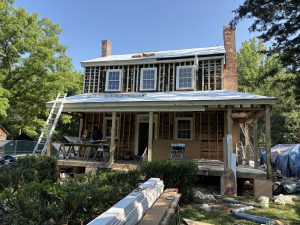
- Exterior view of the Walnut Grove house during restoration, with original structure exposed as stabilization and rehabilitation work progressed. Photo courtesy of Spartanburg County Foundation.
-
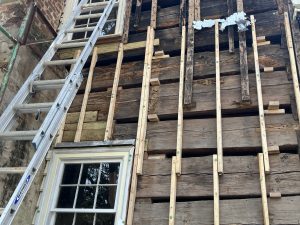
- Original timber beams exposed during exterior restoration allowed the project team to assess deterioration and reinforce the historic structure while preserving as much original material as possible.Photo courtesy of the Spartanburg County Foundation.
-

- Exposed ceiling framing during restoration reveals original wood joists reinforced with discreet steel elements. This approach stabilized the structure while preserving historic materials and accommodating the building’s irregular geometry. Photo courtesy of the Spartanburg County Foundation.
-
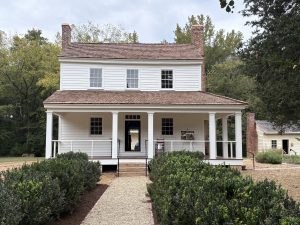
- The restored Walnut Grove house following completion of structural stabilization and exterior rehabilitation. Work was guided by historic documentation and focused on retaining original materials and proportions while preparing the home for continued public interpretation. Photo courtesy of Spartanburg County Foundation