
By Christina Larson
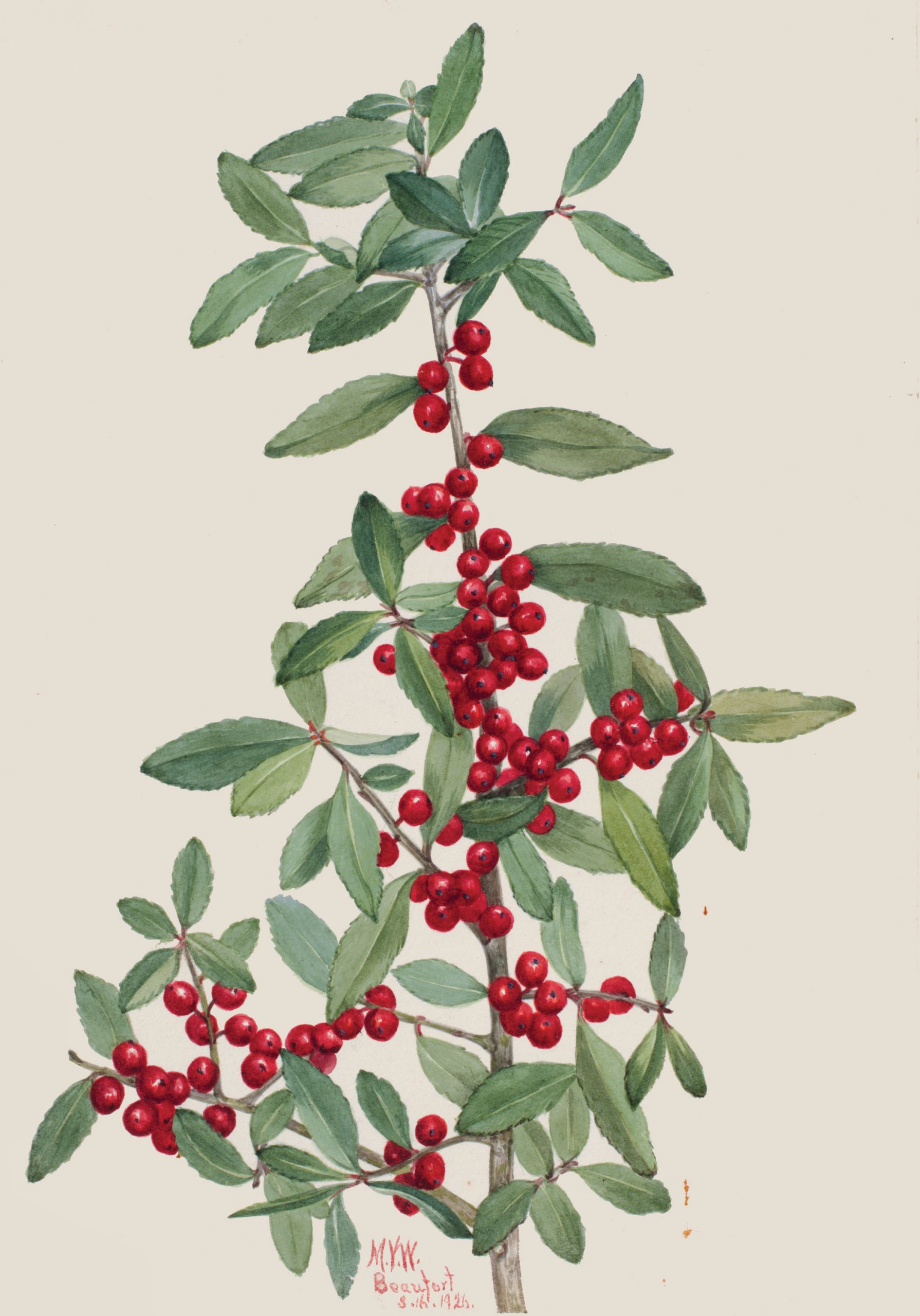
Yaupon holly (Ilex vomitoria), the only caffeine-producing plant native to what is now the United States, is an evergreen shrub with white flowers and bright red berries that grows wild in southeastern coastal regions. Today a dark tea made from yaupon leaves is sacred to some Native American groups and available commercially from specialty tea producers. But before Europeans arrived in the New World, a drink brewed from Ilex vomitoria was the most widely consumed caffeinated drink across eastern North America. Exactly how widely drunk it is—and how far back its origins stretch—has long intrigued archaeologists like Dr. Timothy Pauketat.
Pauketat, now an emeritus professor, used to brew yaupon tea for his students at the University of Illinois Urbana-Champaign. First, he’d roast the green leaves until they turned brown, then drop them into boiling water. “When you boil it, the liquid froths up—it will go right over the top of a small pot,” he said. The strength of the caffeine jolt depends upon how many leaves are used and how long they’re infused. The taste, to him, is “a little on the bitter side, slightly earthy.” He was striving to recreate the approximate flavor of a ritual beverage known through historic accounts by Europeans variously as yaupon tea and cassina but most often as “Black Drink.”
Today, archaeologists have greater insights thanks to new methods of scientific detective work, including organic residue analysis and ancient DNA analysis. But each promising new method comes with its own risks that can further confuse the story.
Illex vomitoria
Around a thousand years ago, North America’s largest pre-Columbian city arose from the floodplains of the Mississippi River, a few miles from modern-day St. Louis. At its height, the urban mecca now known as Cahokia was home to between 10,000 and 20,000 people. The city center was built around carefully constructed and maintained earthen mounds. “These were the largest pyramids north of Mexico, but they were made out of earth and clay, not stone and bricks,” said Dr. Carlton Shield Chief Gover, a citizen of the Pawnee Nation and University of Kansas archaeologist who studies interactions between Central Plains cultures and Mississippian groups to the east.
Thanks to archaeological excavations that began systematically in the 1960s, researchers have a sense of what the city may have been like at its peak around A.D. 1100. Outside a central plaza and the largest earthworks, called Monks Mound, there were rows of small houses, many with household gardens, said Dr. Thomas Emerson, former director of the Illinois State Archaeological Survey and now a researcher at the University of Illinois Urbana-Champaign. “If you wandered around, it would be highly domestic off the main plazas,” he said. Women clad in wrap skirts and ankle-high moccasins would have been standing outside, tending ceramic pots pushed into open fires to cook corn mush and fish. Older children swung wooden pounding sticks to grind corn; younger ones were off gathering driftwood for kindling. Men carried full baskets and nets home from fishing expeditions. “The whole place is full of smoke, with cooking fires for thousands of people,” he said.
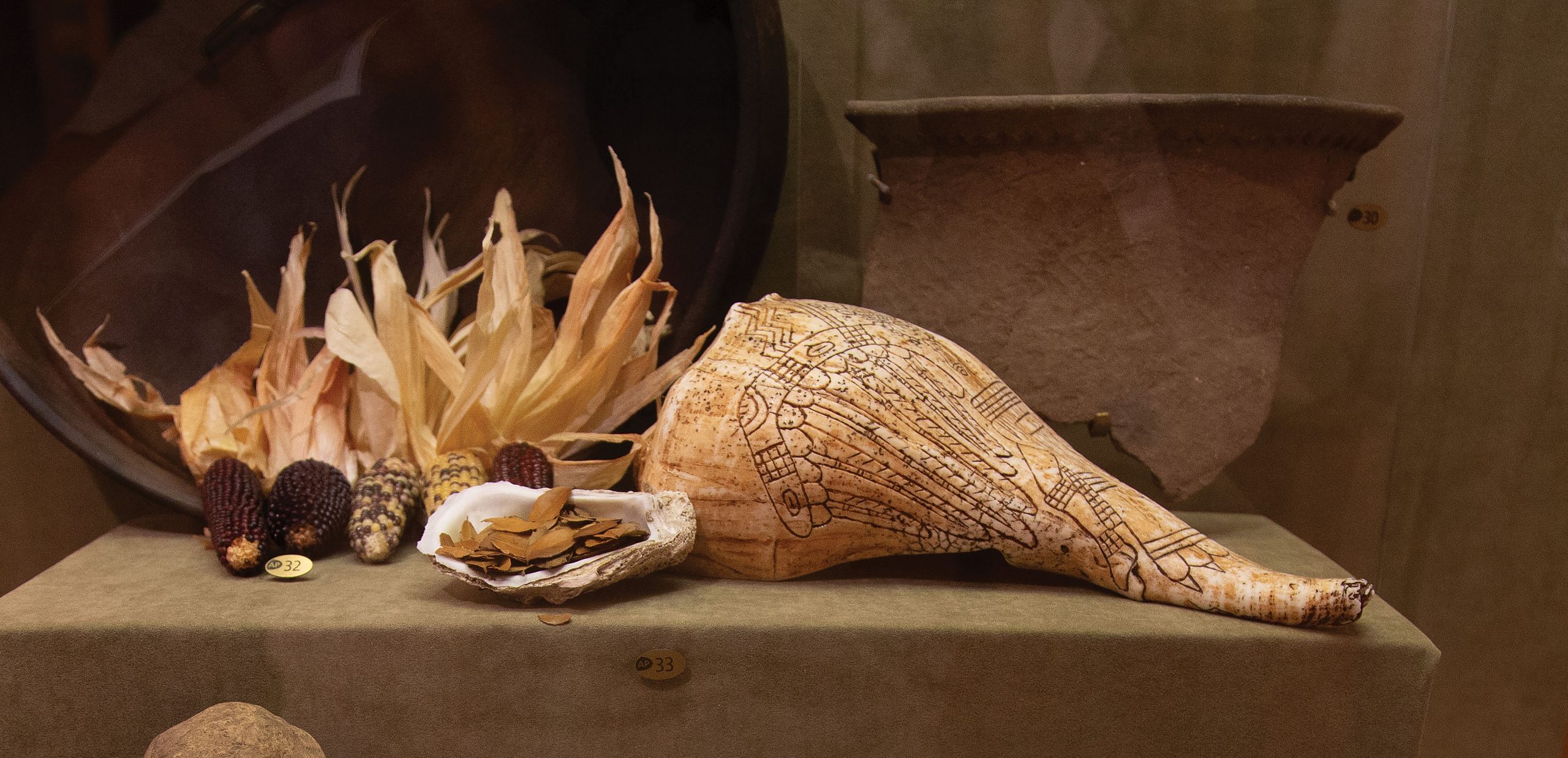
At its height, Cahokia was an influential cultural center, with some of the elite using items like whelk shell cups from the Atlantic Coast and copper from the Great Lakes region. Other Mississippian cultures that later built mounds, including Etowah in Georgia, may have been inspired or built by people traveling from Cahokia. But around A.D. 1300, the population of the great city on the Mississippi rapidly fell, and soon its wide plazas and ceremonial sites were abandoned. “The word ‘collapsed’ is overused,” said Shield Chief Gover, “but probably people voted with their feet and went elsewhere for better opportunities.” Researchers continue to debate what role climate changes and maize crop failures may have played in the downfall.
From charred remains, archaeologists have been able to glean insights into the diets and daily lives of Cahokians. After taking soil from hearths and midden pits, researchers used large drums of water to separate tiny floating organic matter, a technique borrowed and adapted from the mining industry beginning in the 1960s. Once dried, the charred remains can be identified by specialists under a microscope. “We started to find all these little bitty seeds that broadened our notion of what agriculture at the time was,” said Dr. Gayle Fritz, a paleoethnobotanist at Washington University in St. Louis and author of Feeding Cahokia. Among the objects that hinted at Cahokia’s far-flung connections were ceramic beakers whose contents had long vanished.
But the same methods could not be used to solve all riddles. Some of the most exquisite items recovered from Cahokia were cylindrical ceramic beakers, with straight handles and a small lip. Some were decorated with striking geometric patterns. But there were no visible organic materials to test, Fritz said. Nor were seeds of yaupon holly plants ever found at Cahokia, which lies outside the coastal plant’s native range: an arc stretching from Virginia down to northern Florida, then west to Texas’s Gulf Coast. So, the alluring beakers were deposited in the collection of the Illinois State Archaeological Survey, along with several ceramic sherds sealed in bags, waiting for future researchers with new techniques to unlock their mysteries.
This is an excerpt of ‘Tracing Black Drink’ in American Archaeology, Fall 2026, Vol. 30, No. 3. Subscribe to read the full text.