
By David Malakoff
A few miles from the college town of Geneseo, New York, mammoth, gnarled trees known as the Genesee Oaks punctuate a rolling plain carpeted by grasses and crops. Burly limbs stretch from trunks so stout and formidable that they make human visitors seem insignificant. “This is an amazing collection of trees,” said Dr. Stephen Tulowiecki, a biogeographer at SUNY Geneseo. As he and a faculty colleague, cultural geographer David Robertson, admired the oaks on a crisp morning last fall, he said: “People come from all over to photograph them.” Few visitors may realize, however, that the bucolic oaks are rooted in a fiery past.
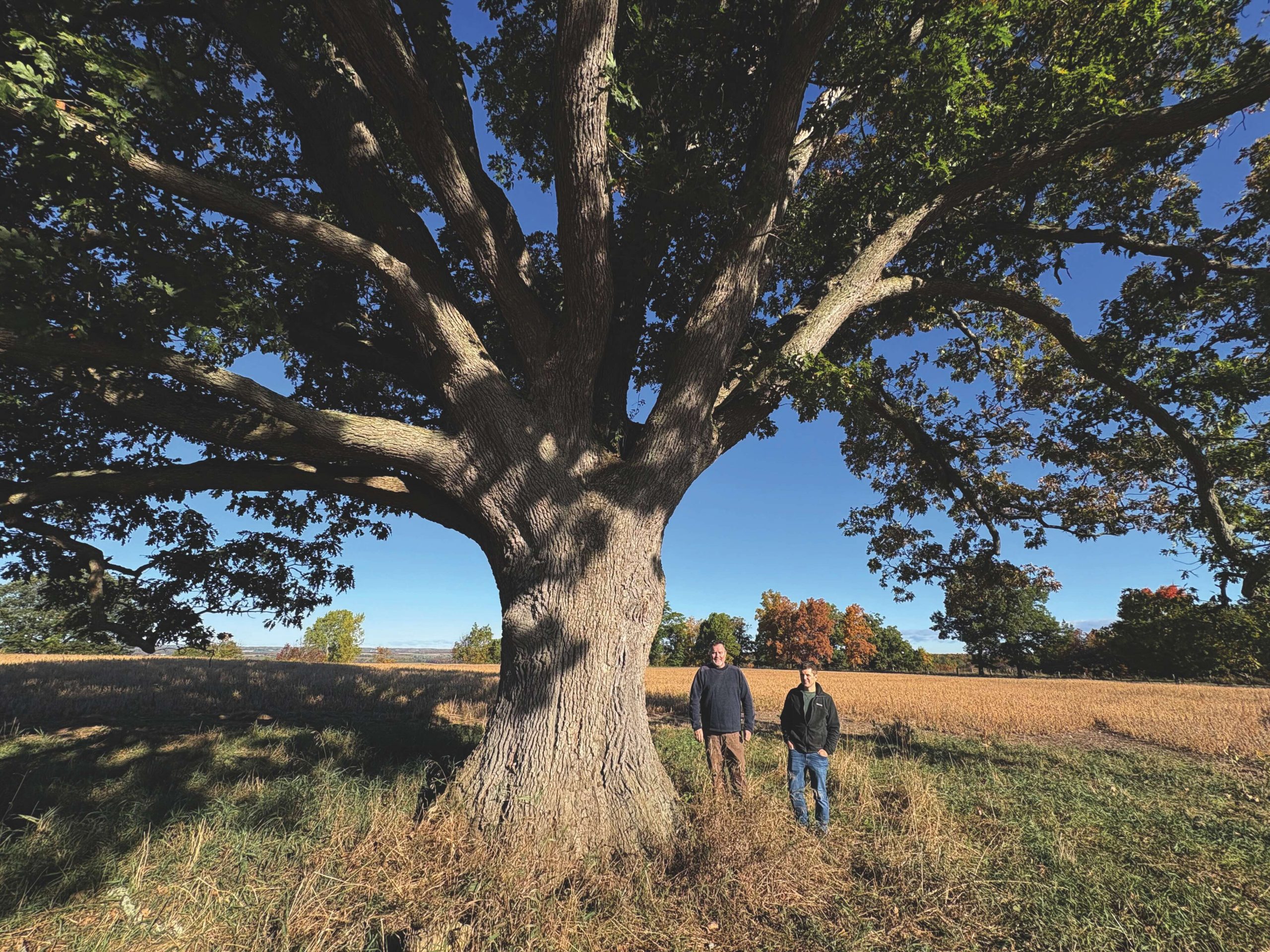
Cultural geographer Dr. David Robertson, left, and
biogeographer Dr. Stephen Tulowiecki, right, from
SUNY-Geneseo, stand next to a mature Genesee oak tree
north of Geneseo, New York. Photo by David Malakoff.
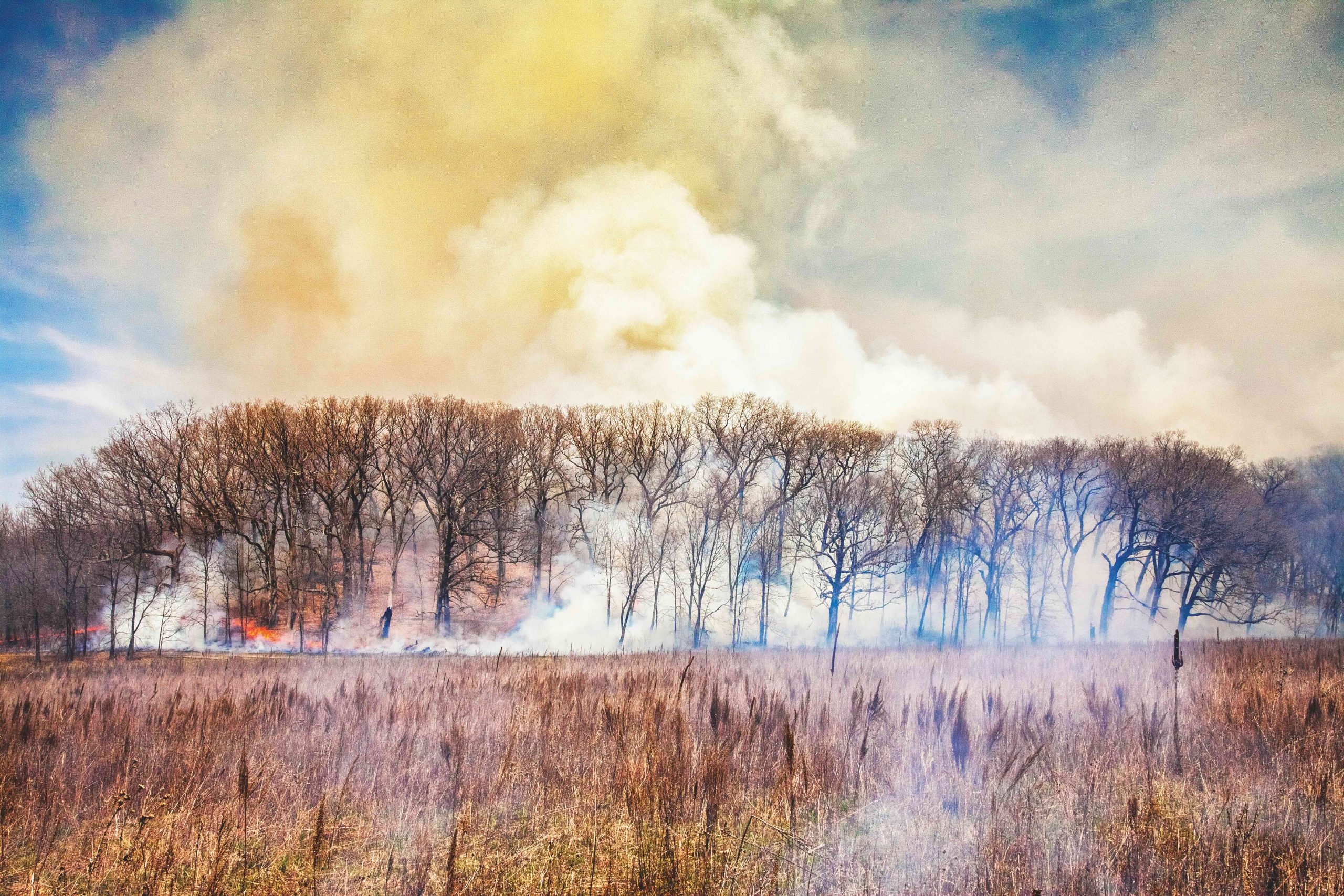
Research by Tulowiecki, Robertson, and others concludes that long before Europeans settled in the Genesee River Valley in the late 1700s, Native Americans who lived there were using fire to shape their surroundings. The burns cleared the landscape and favored the growth of oaks and other trees adapted to survive periodic low-intensity blazes. One result was swaths of what ecologists call oak savanna, park-like expanses of grasses and shrubs with scattered clumps of trees. Today, the Genesee Oaks “are a relict of that landscape,” said Tulowiecki, a chunk of historic savanna that European-American settlers later helped preserve, in part because they liked its appearance. “It might not be obvious, but we’re looking at a living legacy of how Indigenous people managed this environment,” Robertson said.
How extensively Native Americans used fire in the pre-colonial Northeast, and what that history should mean for forest management today, has become a topic of sometimes fierce scholarly debate. In search of answers, researchers have turned to a wide range of information, including data from archaeological sites, charcoal pieces and pollen grains pulled from muddy sediments, analyses of the scars that fires leave on trees, descriptions of “witness trees” from land survey records, traditional ecological knowledge held by Indigenous peoples today, and Native American burning practices in historic records. Many scientists argue the evidence shows that Indigenous burning once played a widespread role in shaping the region’s forests and that modern efforts to suppress wildfires have had disastrous consequences for forest ecosystems. But others conclude that it had a more limited impact and that long-term shifts in climate have played a greater role in driving regional forest changes.
The dispute has real-world implications. On one side: those who say land managers need to bring back Indigenous burning practices to restore oak-dominated forests and wildlife that depend upon them—and help them thrive in the future. On the other: those who warn against basing modern management on a flawed understanding of the past, as that would be a mistake and potentially open the door to greater environmental harm.
This is an excerpt of ‘The Burning Question’ in American Archaeology, Spring 2026, Vol. 30, No. 1. Subscribe to read the full text.