
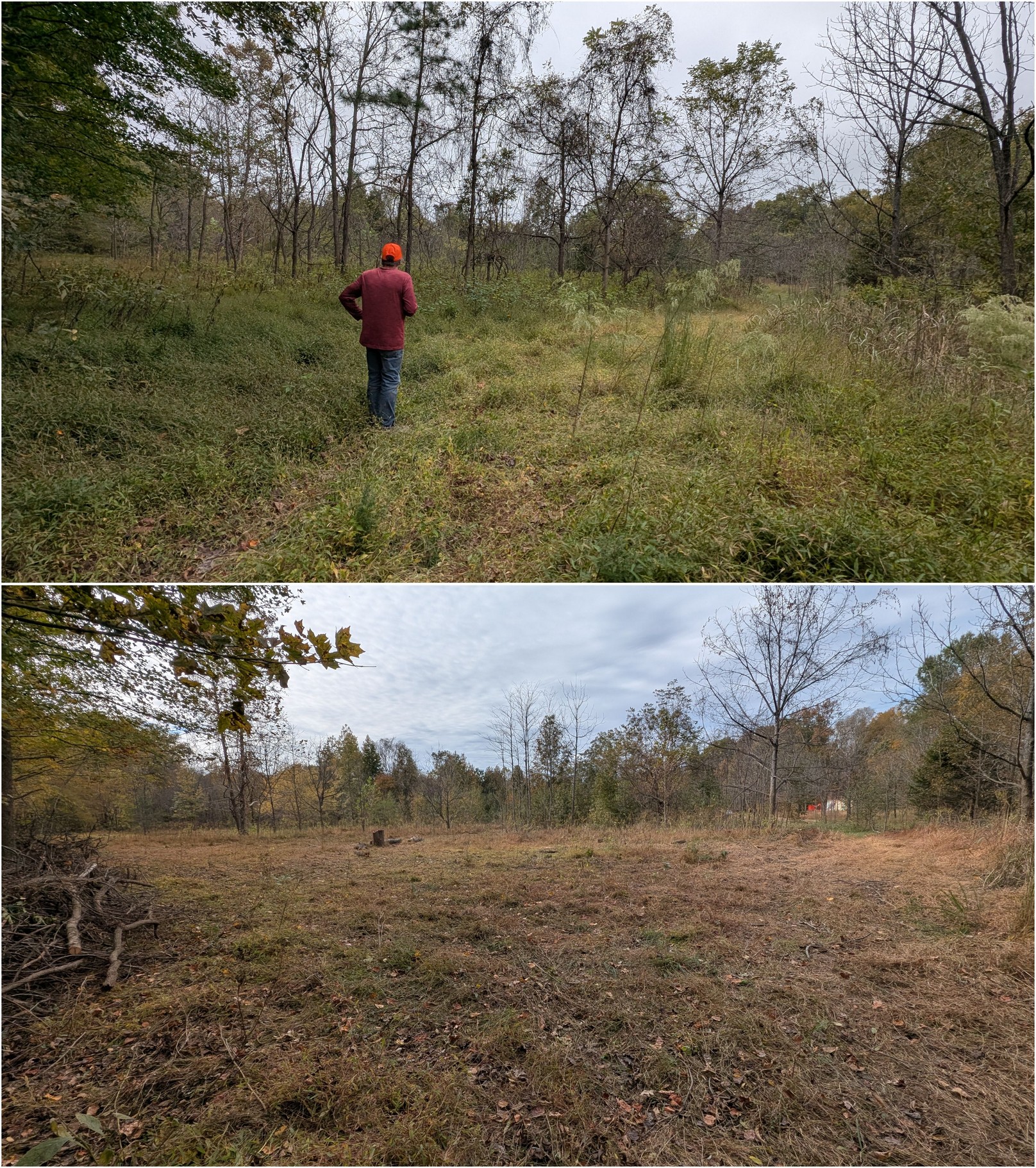
EAST—Volunteer site stewards with the Friends of the Mountains-to-Sea Trail have contributed more than 1,200 hours removing trees from archaeological site areas at the Hillsborough Sites Preserve in North Carolina.
The Archaeological Conservancy acquired the 24-acre property in 2025. It contains at least four distinct late precontact and contact-period Native American sites, including historic Occaneechi Town. Years after the University of North Carolina at Chapel Hill concluded excavations, mowing ceased in the large open areas containing much of the archaeological deposits. Sweetgum, black walnut, and other trees became established across the property.
Growing roots can significantly disturb archaeological deposits. Because of this, when the Conservancy acquires a site that is in open field, staff ensure that field remains open through mowing or farming; however, if a site is under established forest, we leave it as-is since removing the trees would cause more harm. The Hillsborough situation was right in the middle: the trees were still young enough to remove, but their number made professional clearing prohibitively expensive.
Staff found a solution after meeting Bill Boyarsky, the Orange County task force leader for the Friends of the Mountains-to-Sea Trail, which passes through the preserve. Boyarsky suggested using the property for the organization’s Chainsaw Practical Experience and Mentoring Program. Through the program, experienced sawyers train and support volunteers seeking additional experience and certification.
As the partnership approaches its first anniversary, volunteers have cleared significant acreage, removing trees growing over archaeological deposits and invasive plants while retaining selected native trees for ecological benefits. Some firewood has gone to local residents, including members of the Occaneechi community.
Work will continue into 2027. The Conservancy is also considering maintaining the cleared land as prairie or meadow. The scale of this stewardship effort would not have been possible without the volunteers’ extraordinary commitment to the preserve.