

By Tamara Jager Stewart
“We cannot properly tell stories without a community fire ring to gather around,” said Carrie Lipe, eldest daughter of William “Bill” D. Lipe, as she lit candles on a table along with family, friends, and colleagues at Crow Canyon Archaeological Center for a celebration of Bill’s life this September. He passed away at his home April 9, 2025, with his family by his side, just a month from his 90th birthday. Carrie recalled his steady sense of purpose and his great loves—family; his “feisty, energetic, and capable” wife, June; friends and colleagues; archaeology, scholarship, and teaching; and the Colorado Plateau, where the family often joined him on expeditions and the fire ring marked the heart of camp.
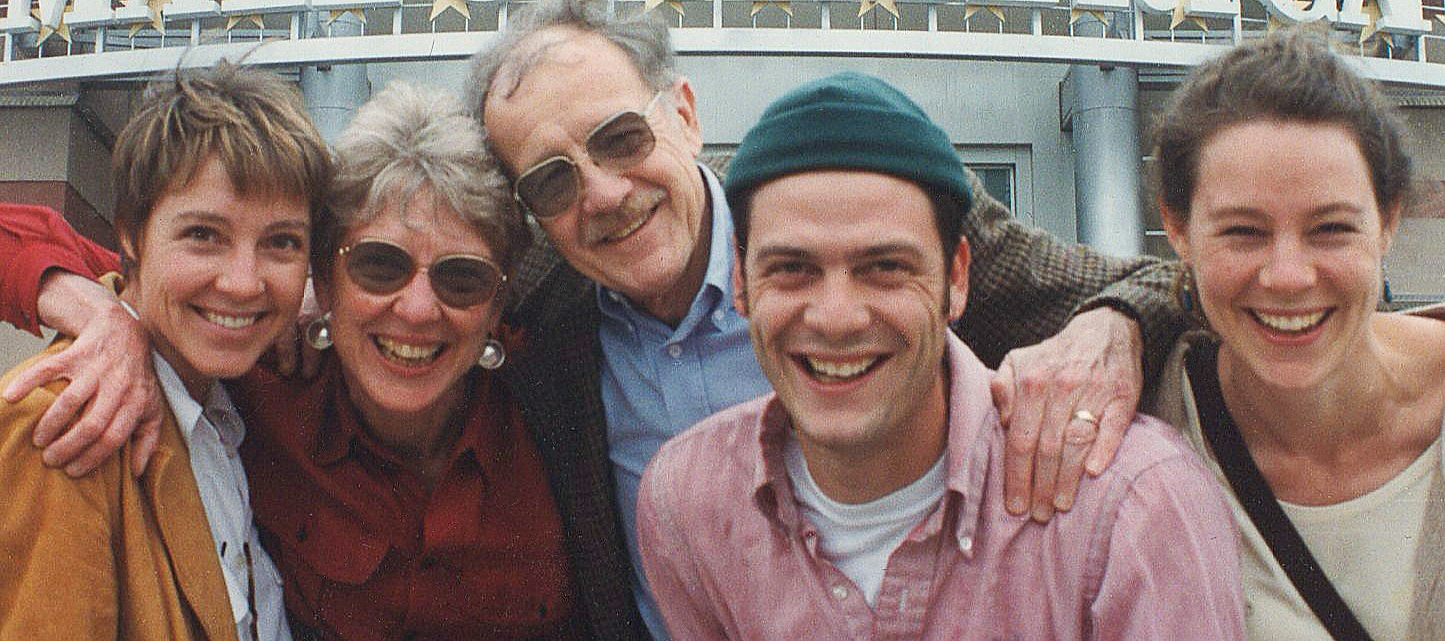
The Lipe family, from left to right, Jessie, June, Bill, David, and Carrie, on a surprise visit to the 1995 Society for American Archaeology conference for Bill’s acceptance of its presidency, which coincided with his 60th birthday. Photo courtesy of the Lipe family.
Renowned archaeologist Bill Lipe’s story began in 1935 with his birth in Struggleville, Oklahoma, a small oil company town. Kept home from school until eighth grade due to asthma; he spent his early years reading in the local library, feeding his endless curiosity. Once able to participate in school, he made up for lost time, joining the debate team, school newspaper, and student leadership, including a stint as student body president. During his senior year, Bill competed in a regional radio trivia contest, gaining him a four-year scholarship to the University of Tulsa and earning him the title “Grand Knowledge Champion of the Southwest,” a harbinger of things to come. After his freshman year of college, Bill transferred to the University of Oklahoma to pursue a degree in anthropology. In 1956, Bill attended a University of Arizona field school at Point of Pines, Arizona, directed by Southwest legend, Dr. Emil Haury, where Bill gained valuable experience that led to a summer internship the following year at the Museum of Northern Arizona (MNA) under the tutelage of Dr. David Breternitz, then the museum’s curator of anthropology. Bill assisted with several excavations, including highway salvage projects in northern Arizona. “I first met Bill when he came to MNA to be Dave’s summer intern,” recalled Breternitz’s wife, Barb. “That summer he met his wife-to-be,” she said of June Finley. “They seemed meant for each other.” Lipe later described that summer of 1957 and his five-year courtship with June as a “glorious love affair across the Colorado Plateau.” They married in 1962 and eventually had three children, daughter Carrie followed by twins David and Jessie, and later two grandchildren, Finn and Max.
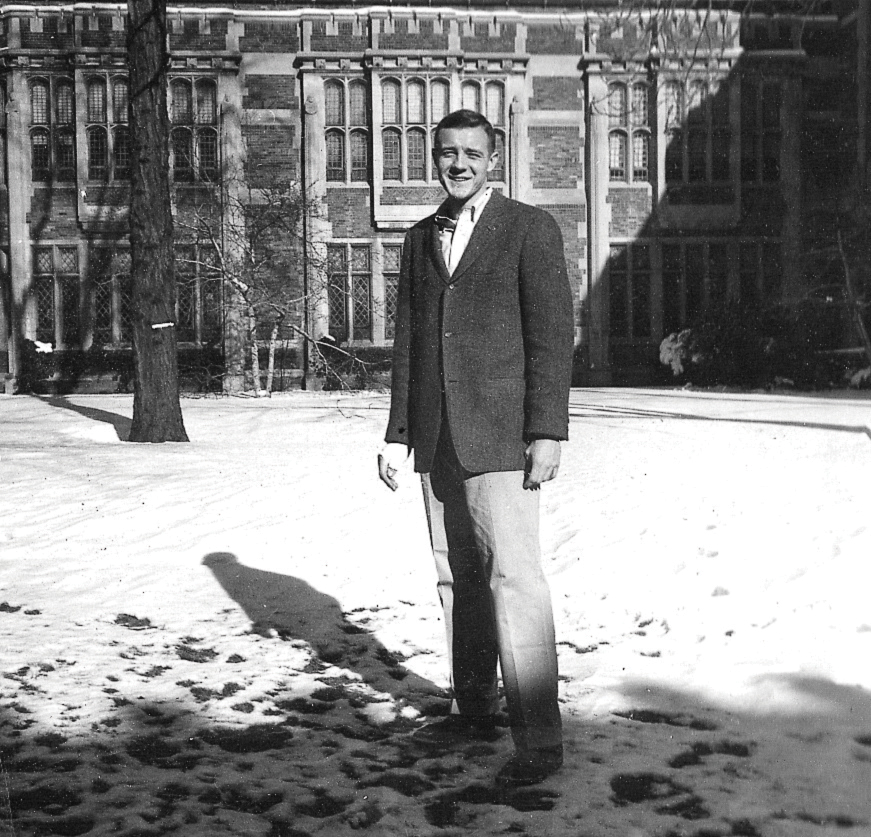
Bill Lipe at Yale University, circa 1958.
After graduating, Bill was awarded a fellowship at Yale University to start his Ph.D. coursework. While attending his first professional archaeology meeting, Bill met Dr. Jesse Jennings of the University of Utah, who was recruiting field crews for a salvage archaeology project associated with the planned construction of the Glen Canyon Dam. Despite Bill’s young age of 23, Jennings hired him as crew chief for the 1958 summer season river crew. Along with other young men, Bill was tasked with surveying acres of land, rapidly documenting more than 2,000 ancestral Puebloan sites, and excavating 200 more within and adjacent to the flood zone before the dam inundated the canyon and surrounding landscape, creating the current-day Lake Powell reservoir. Colleague Don Fowler oversaw the Glen Canyon survey, while Bill directed the excavations. “Bill took his various executive and scientific duties seriously,” wrote Fowler of their work together in the 2006 edited book Tracking Ancient Footsteps: William D. Lipe’s Contributions to Southwestern Prehistory and Public Archaeology. “We called him ‘Mr. Science,’ partly in jest, and partly in recognition of his ability and enthusiasm.”
This is an excerpt of ‘Mr. Science — A Visionary Leader’ in American Archaeology, Winter 2025, Vol. 29, and No. 4. Subscribe to read the full text.